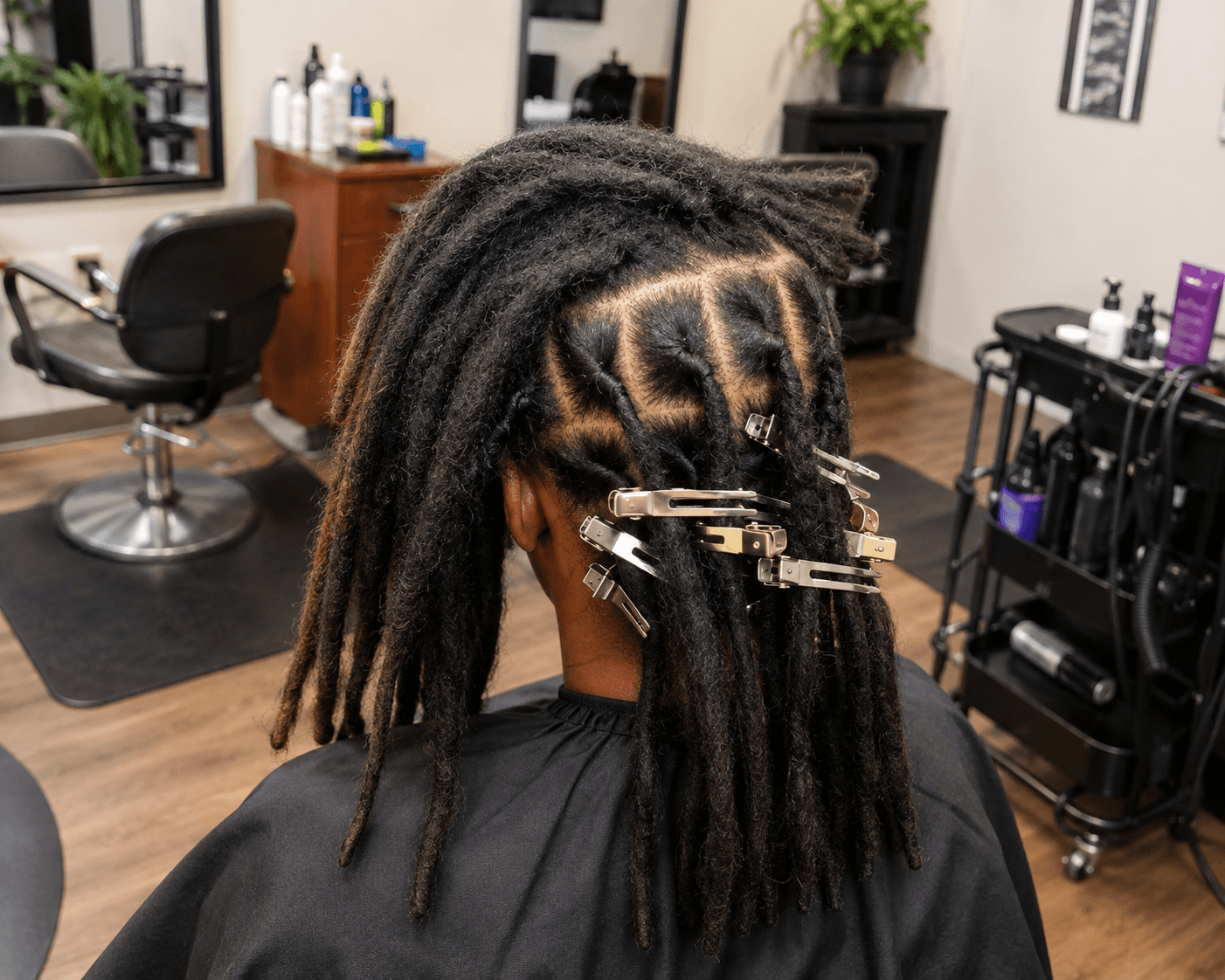
Retwisting organizes new growth and changes appearance; it does not biologically increase the rate of hair growth. A retwist can make locs look cleaner and more defined, but the appearance of neatness should not be confused with the health of the hair or scalp.
Healthy maintenance should support the hair rather than constantly pull it into place. The goal is to manage new growth while preserving the strength of the roots, the comfort of the scalp, and the long-term integrity of the locs.
A maintenance routine should not routinely cause pain, tenderness, bumps, headaches, or excessive pulling. These are reasons to reassess the technique, the amount of tension, the frequency of retwisting, or the type of style being created.
Some people experience mild sensitivity after maintenance, especially if the scalp has not been manipulated recently. However, significant pain is not a requirement for a good retwist. If the scalp feels sore, tight, or painful, the style may be too tight or the hair may need more time between maintenance sessions.
Retwisting too frequently can place repeated stress on the same areas of new growth. When the roots are constantly separated, twisted, pulled, or styled, the hair may not have enough time to recover between sessions.
There is no universal retwist schedule that works for everyone. Hair texture, loc size, installation method, rate of new growth, lifestyle, scalp condition, and styling preferences all affect how often maintenance may be appropriate.
Some people may prefer a more defined appearance every few weeks, while others may benefit from waiting longer between retwists. A little visible new growth does not automatically mean the locs are unhealthy or that maintenance is overdue.
Longer and heavier locs can place more stress on roots, so loc length, size, styling, and maintenance should be considered together. As locs become longer, the weight of the hair can increase the strain placed on the scalp, especially when the hair is gathered into tight ponytails, buns, or updos.
The size of the loc can also affect how weight is distributed. Very small locs may have less hair supporting the weight of each individual section, while larger locs may place more weight on fewer root areas. Neither size is automatically healthier; the important factor is whether the roots can comfortably support the loc.
Tight styling between retwists can create additional stress. Ponytails, buns, barrel styles, cornrows, and other styles that pull the locs in one direction may increase tension, especially around the hairline, temples, and nape.
If a style causes discomfort, looseness at the roots, bumps, broken hairs, or visible thinning, it should be removed or adjusted. Keeping a style in place simply because it looks neat can allow unnecessary tension to continue for too long.
The hairline often needs special attention because the edges may be more delicate and more vulnerable to repeated pulling. Avoid consistently directing heavy locs backward or using tight styles that place concentrated pressure on the same areas.
A healthy maintenance session should include communication. Tell your loctician if the previous retwist caused soreness, if your scalp has been irritated, or if you have noticed thinning or breakage. Maintenance should be adjusted based on what your hair and scalp are showing you.
The amount of product used during a retwist also matters. Heavy gels, waxes, creams, and repeated layers of styling products can contribute to buildup. Product buildup may make locs feel stiff, coated, or difficult to cleanse, and it can make the scalp harder to evaluate.
More product does not necessarily create a better retwist. A clean, controlled technique with minimal appropriate product may be easier to maintain than a style that depends on heavy layers of gel or wax.
Between maintenance sessions, focus on keeping the scalp clean, limiting unnecessary manipulation, and protecting the locs during sleep and physical activity. A satin or silk covering may help reduce friction, but it should not be tied so tightly that it creates pressure around the hairline.
If you are experiencing persistent tenderness, scalp inflammation, broken hairs, thinning edges, recession, or areas where the locs feel unusually loose, do not wait for the next scheduled retwist to address it. Consider taking a break from tension-based styling and seek evaluation from a qualified healthcare professional when symptoms persist or worsen.
Traction-related hair loss can become more difficult to reverse when tension continues over time. Early attention gives you a better opportunity to identify the source of the stress and change the routine before the problem progresses.
A good retwist should leave the hair organized without making the scalp feel strained. Neatness is one part of maintenance, but comfort, root strength, scalp condition, and long-term hair health should carry equal or greater importance.
The best maintenance routine is one that works with your hair instead of constantly forcing it into a particular appearance. Give your locs enough time between sessions, avoid painful tension, and adjust your routine as your locs become longer, heavier, and more mature.