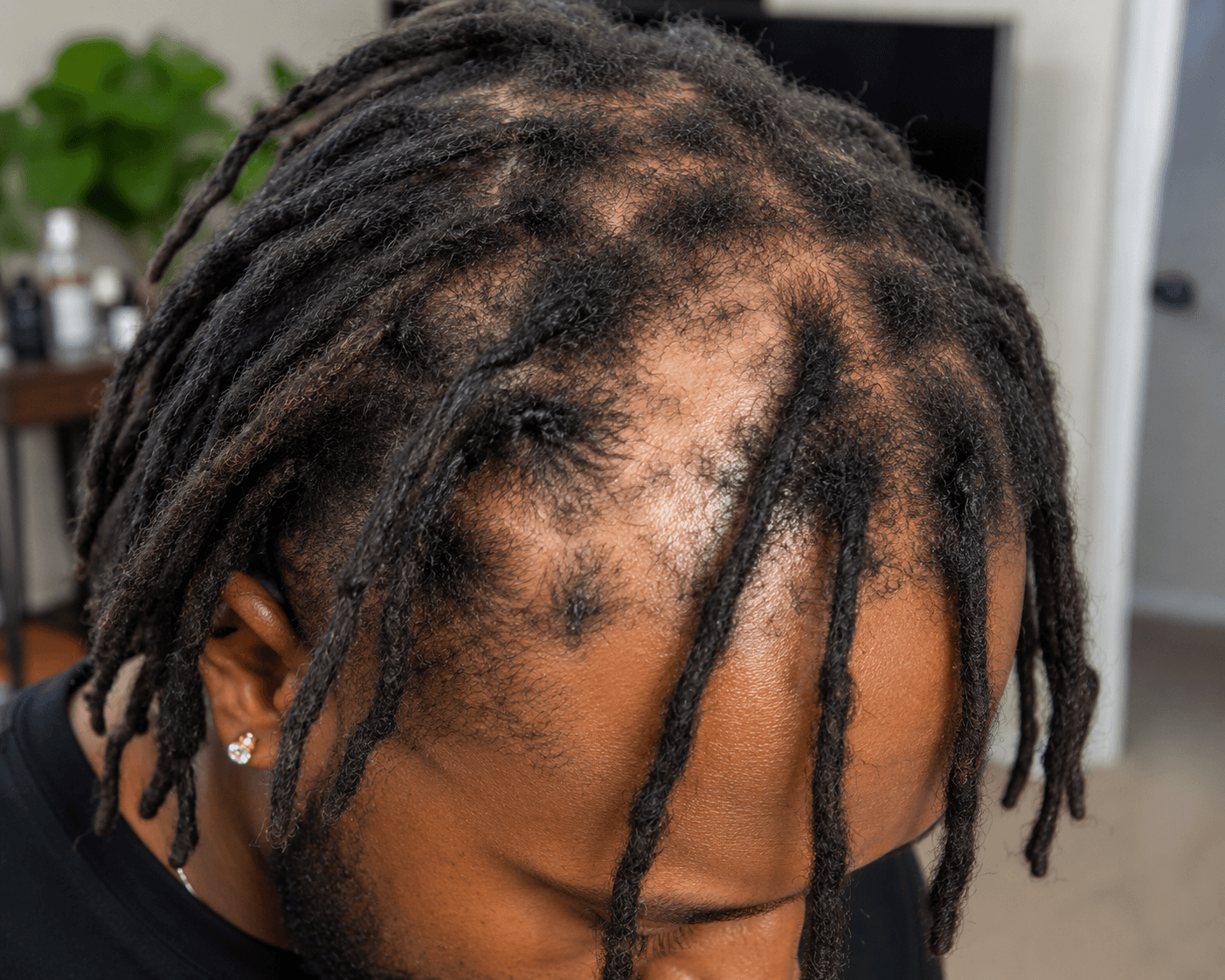
Traction alopecia is a type of hair loss caused by repeated or prolonged pulling on the hair and scalp. In locs, it can develop when styles are consistently too tight, locs are excessively heavy, or the same areas are placed under tension during maintenance.
Tension can come from tight retwists, tightly styled updos, ponytails, buns, braids, extensions, or frequent manipulation around the hairline. The edges, temples, and nape are often more vulnerable because the hair in these areas may be finer and less able to tolerate repeated stress.
Repeated pulling can contribute to traction alopecia. Warning signs can include pain during styling, tenderness, bumps, broken hairs, thinning edges, recession, or thinning in heavily maintained areas.
Pain is a warning sign, not proof that the style is extra fresh. A healthy maintenance session should not leave the scalp feeling sore, burning, throbbing, or unusually sensitive. If a style causes discomfort, the tension should be reduced immediately.
Other early signs may include redness, small pimples, crusting, itching, or a tight sensation around the roots. Some people may notice short broken hairs around the hairline before they notice visible thinning.
Traction alopecia can develop gradually. Repeated stress may first cause temporary shedding or breakage, but continued tension can damage the hair follicles. When follicle damage becomes advanced, hair loss may become permanent.
Locs can place additional weight on the scalp as they grow longer and thicker. This does not mean long or mature locs automatically cause hair loss, but it does mean styling choices should account for the weight being placed on the roots.
Avoid pulling all of the locs into styles that place concentrated pressure on one area. Rotating styles, leaving the hair loose between maintenance sessions, and avoiding consistently tight ponytails or buns can help reduce repeated stress.
Retwisting should not require excessive force. If the roots are being pulled tightly, the scalp is visibly raised, or the hairline looks strained, the maintenance technique should be adjusted. A clean appearance should never come at the expense of scalp comfort.
Frequent retwisting can also increase stress on the same areas. Allowing enough time between maintenance sessions gives the scalp and roots a chance to recover and reduces the need for repeated manipulation.
Be especially careful around thinning edges, weak areas, or previously damaged sections. These areas may need less tension, less frequent styling, and sometimes a temporary break from retwisting or protective styles.
Do not ignore pain because it disappears after a few hours. Temporary relief does not necessarily mean the tension was harmless. Repeated episodes of soreness can indicate that the hair and scalp are being placed under too much stress.
If a style is too tight, loosen or remove it as soon as possible. Avoid trying to preserve a style that is causing pain, bumps, scalp irritation, or visible pulling around the roots.
If you notice persistent or worsening hair loss, scalp inflammation, or pain, seek evaluation from a qualified healthcare professional. A dermatologist or other appropriate healthcare provider can help determine whether the hair loss is related to traction or another scalp condition.
Early attention matters because reducing tension may help prevent further damage. Waiting until an area becomes completely bare can make recovery more difficult, particularly if the follicles have been repeatedly injured.
Treatment depends on the cause and severity of the hair loss. A healthcare professional may recommend removing the source of tension, changing styling habits, treating inflammation, or using other therapies when appropriate.
Avoid applying harsh chemicals, strong essential oils, or irritating home remedies to a painful or inflamed scalp. These products may worsen irritation and can make it harder to identify the original cause of the problem.
Healthy loc maintenance should include regular checks of the hairline, temples, and scalp. Pay attention to changes in density, broken hairs, tenderness, bumps, and whether certain styles consistently create discomfort.
Locs can be maintained without constant tension. Gentle styling, reasonable retwist intervals, lighter styling choices, and attention to scalp comfort can support long-term hair health.
The goal is not simply to keep a style in place. The goal is to maintain locs while protecting the follicles, respecting the scalp, and responding early when something feels or looks abnormal.