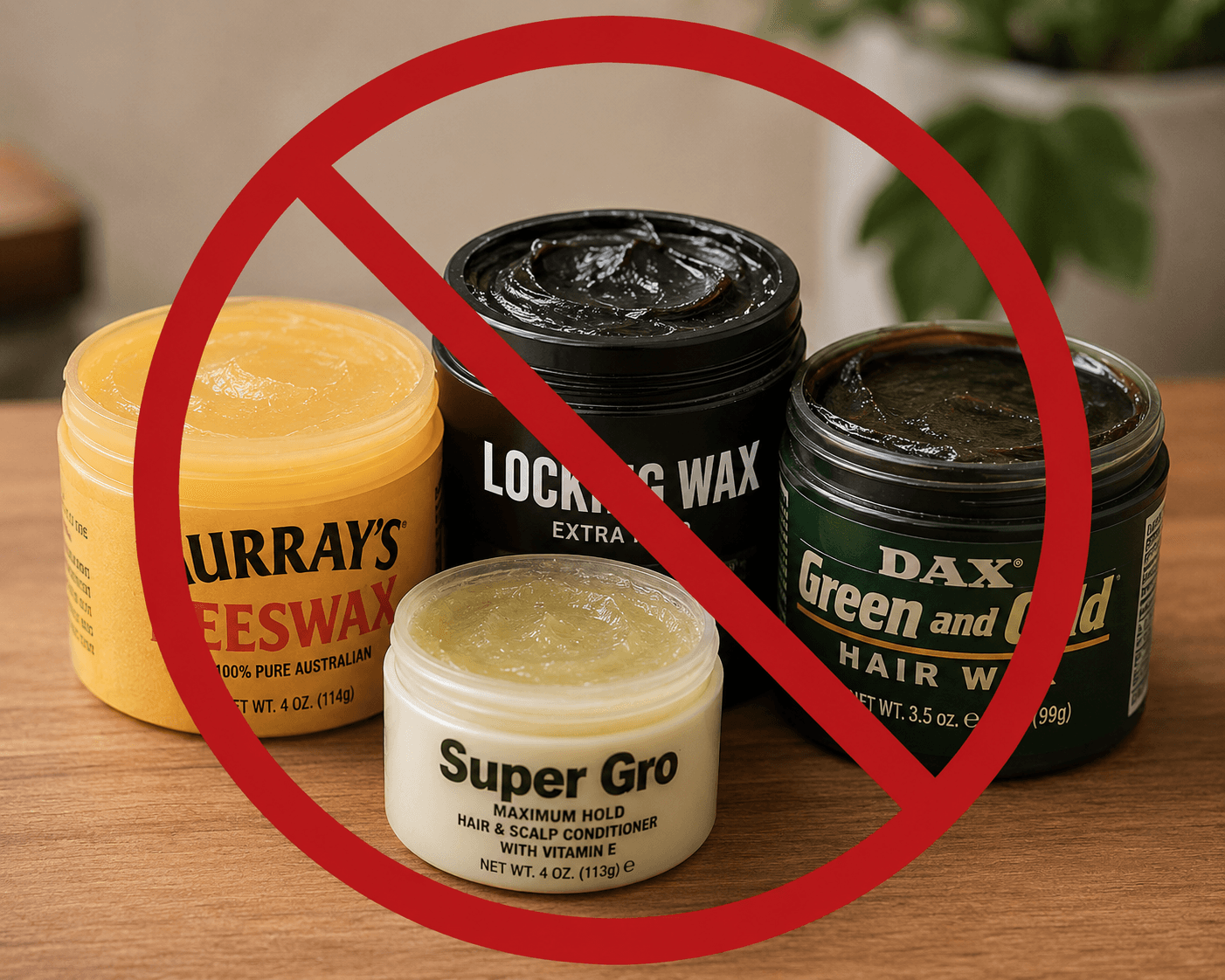
Locs can retain product because their structure is dense. Heavy waxes, butters, creams, gels, pomades, edge products, and excessive oils can accumulate over time, especially when products are applied repeatedly without being fully removed.
Buildup usually develops when product residue combines with shed skin, lint, sweat, and environmental debris. Instead of remaining only on the surface, these materials can become trapped inside the loc where they are harder to see and remove.
Common signs of product buildup include locs that feel unusually heavy, stiff, sticky, greasy, or coated. You may also notice a dull appearance, visible residue when the locs are squeezed, an unpleasant smell, or flakes that return shortly after washing.
More oil is not automatically more moisture. Oils can help reduce friction and support softness, but they do not replace water-based hydration. Applying too much oil can leave the hair coated and may make it more difficult for water and cleanser to reach the loc properly.
Waxes and heavy butters can be especially difficult to remove because they are designed to cling to the hair. Frequent use may create layers of residue that require several careful washes rather than one aggressive cleansing session.
Gels, edge products, and retwisting products can also contribute to buildup when they are applied in large amounts or used too often. Product that is placed around the roots may spread into the loc as the hair is manipulated, while excess product near the hairline can transfer onto surrounding locs.
Natural does not automatically mean buildup-free or irritation-free. Ingredients such as oils, butters, clays, botanical extracts, and essential oils can still leave residue or irritate the scalp depending on the formula, concentration, and amount used.
Product choice should consider whether the material can be thoroughly removed. Lightweight, water-based products are often easier to cleanse from locs than thick waxes, petroleum-based pomades, or heavy creams.
The amount of product matters just as much as the ingredient list. Start with a small amount, apply it only where needed, and avoid repeatedly layering new product over residue that is already present.
A consistent cleansing routine can help prevent buildup. Wash the scalp and locs thoroughly, allow cleanser to reach through the length of the hair, and rinse until the water runs clear and the locs no longer feel coated.
If buildup is already present, avoid scraping, cutting, or aggressively pulling at the locs. Excessive manipulation can weaken the hair and create unnecessary breakage. A clarifying wash or professional loc-cleaning service may be more appropriate for stubborn residue.
Deep cleansing should be balanced with the condition of the hair and scalp. Over-cleansing can leave locs dry or make the scalp uncomfortable, so the goal is to remove residue without repeatedly stripping the hair.
Lint and environmental debris can become attached to product-coated locs more easily. Keeping products controlled and avoiding excessive layering can help reduce the amount of material that becomes trapped over time.
Healthy loc maintenance is not about using the most product. It is about using the right amount, choosing formulas that suit your hair, cleansing consistently, and paying attention to how your locs and scalp respond.
If your locs remain greasy, heavy, coated, or difficult to cleanse after several washes, consider consulting an experienced loctician. Persistent residue may require a more targeted cleansing approach and an adjustment to your maintenance routine.