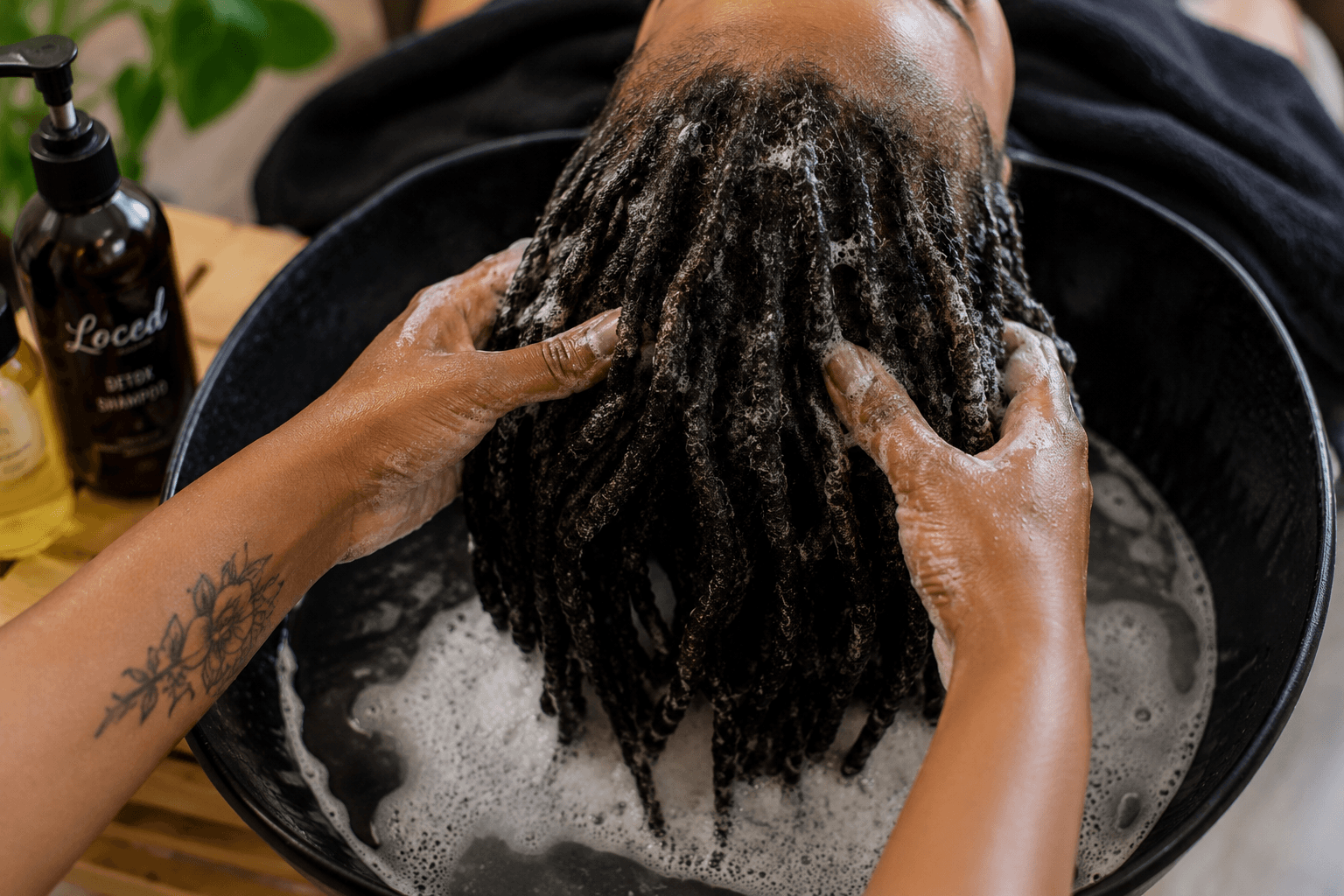
There is no blanket rule that locs should never be washed. Scalp hygiene matters, and washing frequency should reflect oil, sweat, activity, product use, environment, and scalp condition.
Before washing, gently separate the locs and inspect the scalp. Look for areas of buildup, tenderness, irritation, or excessive dryness. This is also a good time to notice whether certain products or maintenance habits may be contributing to scalp discomfort.
Starter locs may unravel more easily, so technique and timing may need to be adapted. Established locs can generally tolerate a routine built around the wearer's scalp needs. If your locs are newly installed, ask your loctician when washing is appropriate for your installation method.
Begin by thoroughly wetting the scalp and locs with lukewarm water. Allow the water to reach the roots instead of only wetting the outside of the locs. This helps loosen sweat, oil, and surface residue before shampoo is applied.
Use a cleanser that can be rinsed thoroughly and apply it primarily to the scalp. Gently massage with the pads of your fingers rather than scratching with your nails. The goal is to clean the scalp without creating unnecessary friction or pulling at the roots.
Let the shampoo move through the locs as you rinse. Depending on your scalp needs and the amount of buildup present, a second gentle cleanse may be useful. Avoid assuming that more shampoo or more scrubbing always produces a better result.
Rinse thoroughly and dry thoroughly. The objective is a clean scalp and locs without excessive manipulation or prolonged dampness. Squeeze out excess water gently with a clean towel, then allow the locs to dry completely before covering or styling them.
Heavy products, frequent oiling, and styling products can make cleansing more difficult. If your locs repeatedly feel coated, stiff, sticky, or difficult to rinse, review the amount and type of product being used rather than simply washing more aggressively.
If washing causes persistent pain, burning, swelling, significant irritation, or worsening scalp symptoms, pause the routine and seek advice from a qualified healthcare professional. A clean scalp should not require painful treatment.
A useful wash routine is one that keeps the scalp comfortable, removes buildup, and works with the maturity and condition of your locs. Pay attention to how your scalp responds and adjust the routine when your needs change.